Jahota X Salesforce
Rural Systems Design
Role
Interaction Designer
Collaborator
Salesforce (Mentorship)
Timeline
Status
Cross-functional Team
College group project · B.Des Interaction Design, JKLU Jaipur
Tools
This is a college group project, built as part of the B.Des Interaction Design programme at JKLU Jaipur. The team was mentored by designers from Salesforce through a week-long orientation and design sprint, with Salesforce leadership on the final jury panel.
Ten weeks inside a village, 30 km from Jaipur.
Jahota is a village in Amber Tehsil, Jaipur District, Rajasthan. We spent 10 weeks studying how its public systems actually work, across education, healthcare, and governance. The study ended in HDCS, a healthcare data collection system for the frontline workers who keep the village healthy and keep its records running.
Census 2011
5,971
Population
76.93%
Literacy rate
910
Households
Field Research
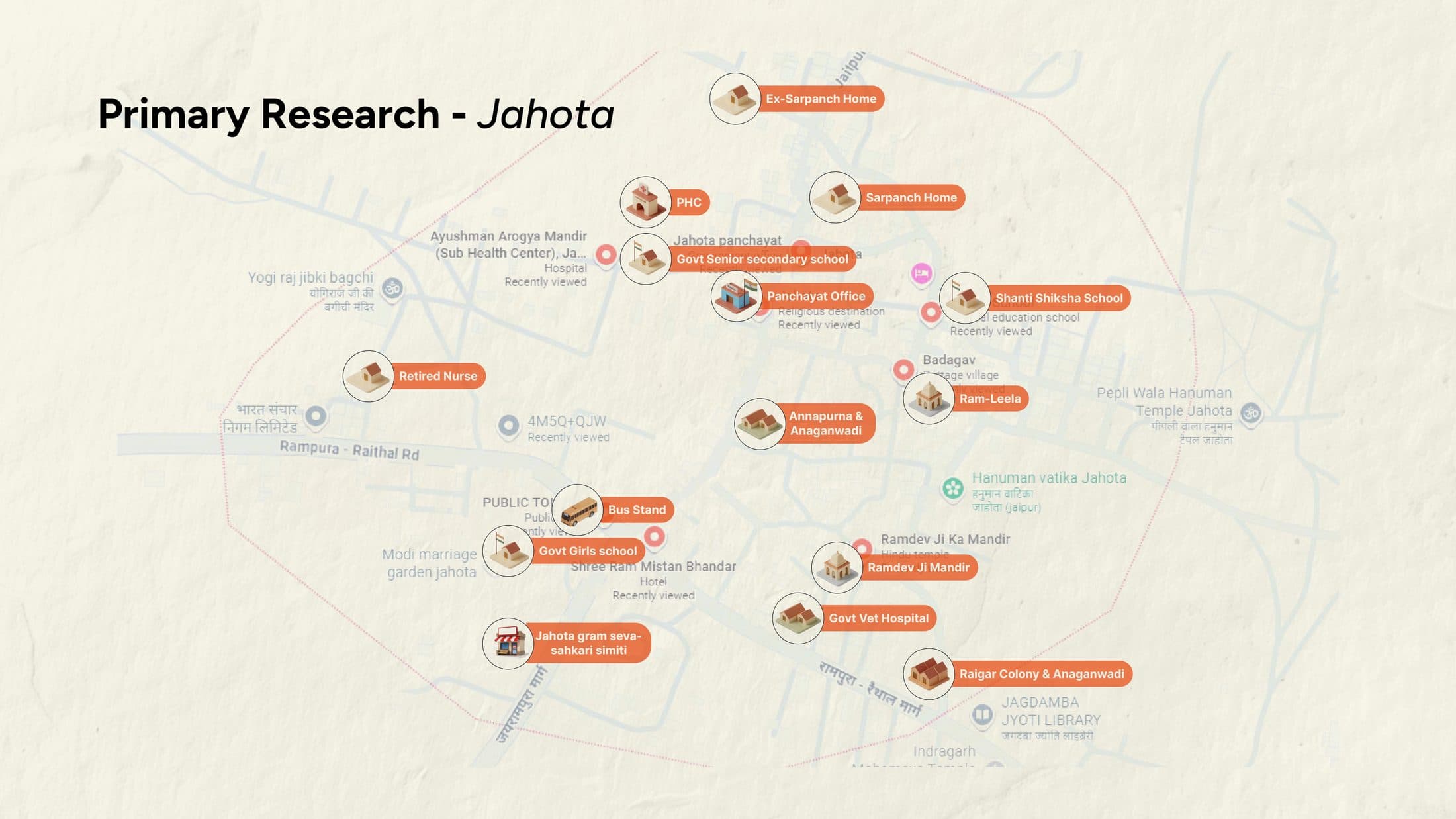
Ten weeks, three sectors, and field visits across the village: two government schools, Anganwadis, private schools, the PHC, the vet hospital, the Panchayat office, and households. We interviewed students, parents, teachers, Anganwadi workers, nurses, the ex-Sarpanch, and shop owners.
Education
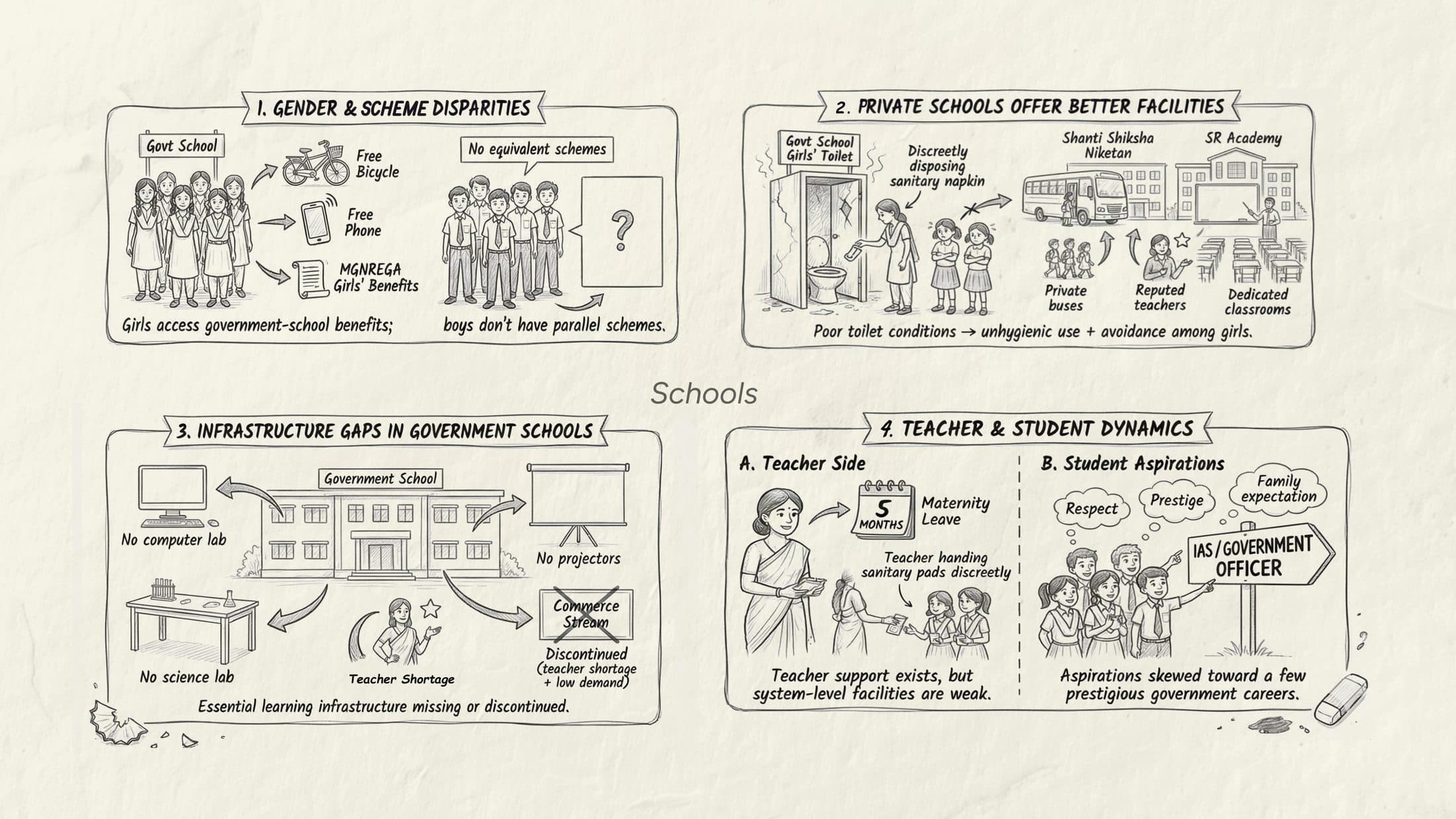
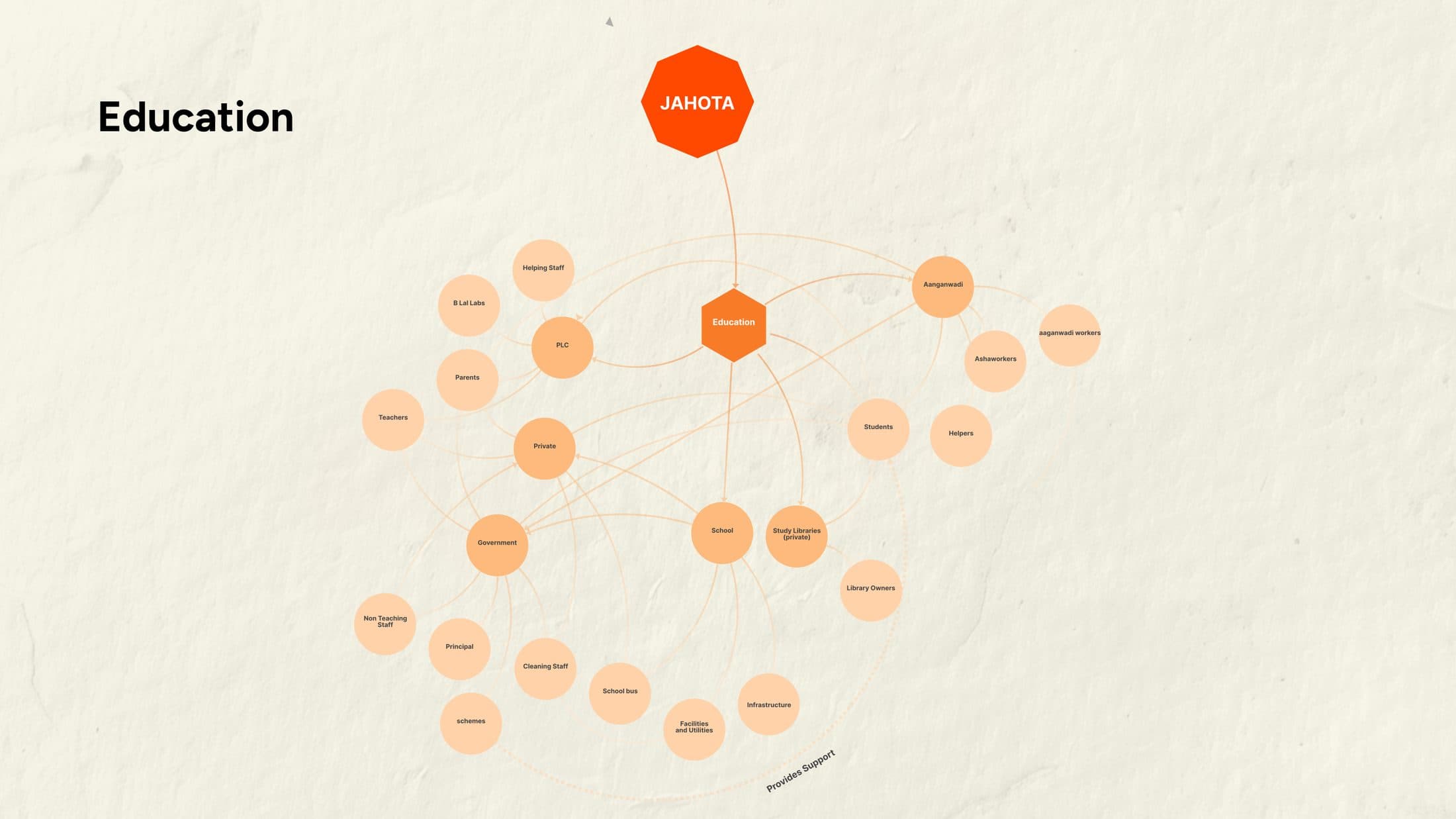
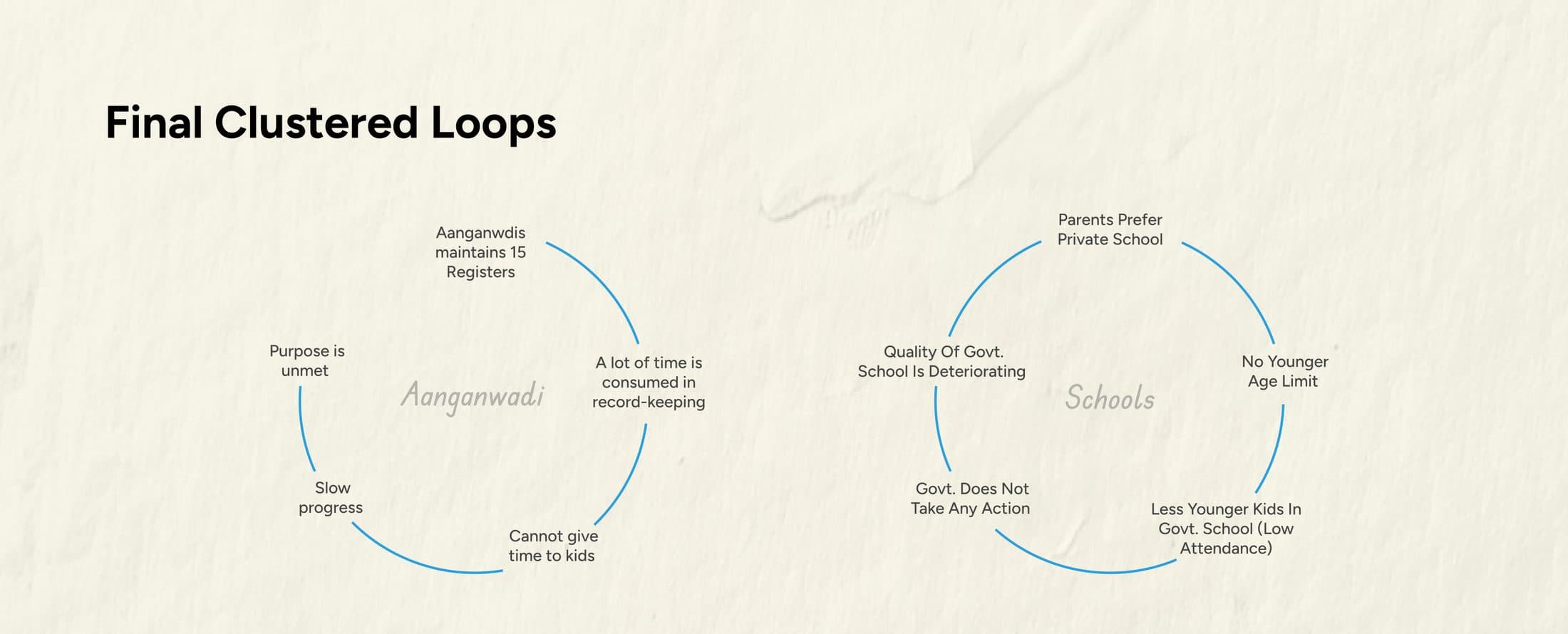
Government schools lose students to private schools despite free schemes. Girls receive scheme benefits with no parallel schemes for boys. Infrastructure gaps run deep: no computer lab, no science lab, and a commerce stream discontinued from teacher shortage. Anganwadi workers maintain 26 daily registers between online and offline systems, so time goes to recording, not children.
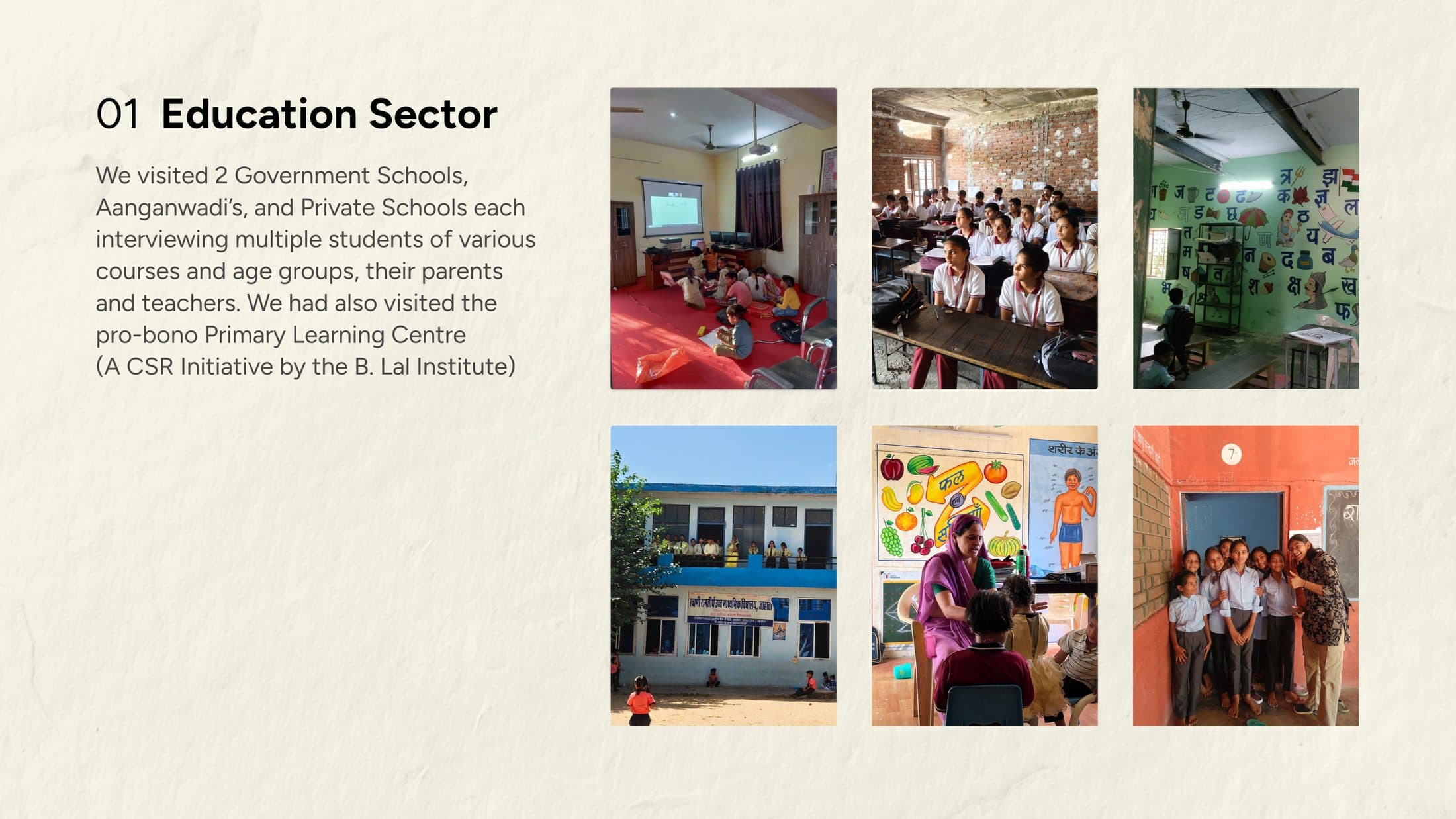
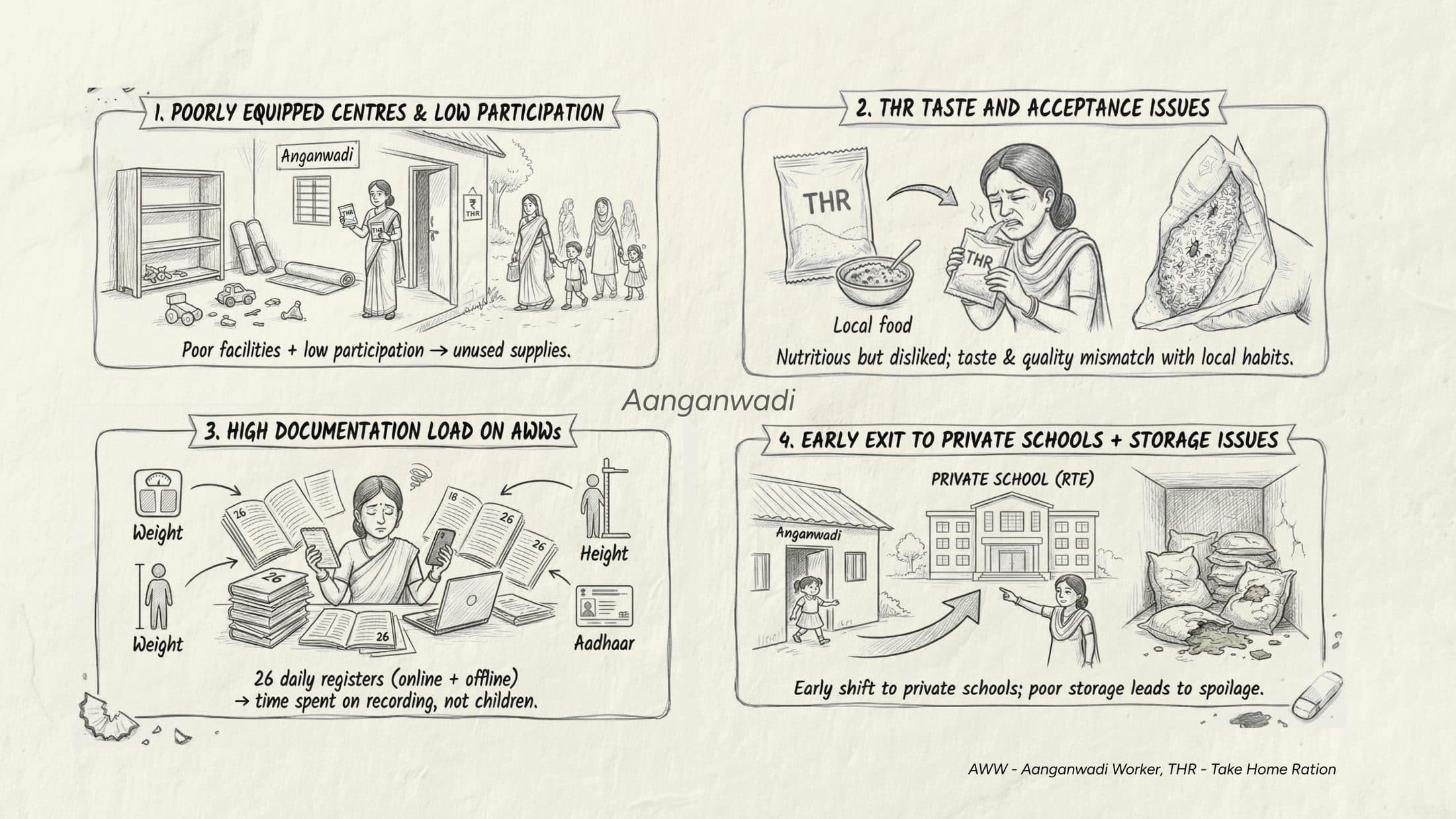
Younger children can only join public school only after turning 6 years old, based on Aadhaar scan.
2.5 years kid comes, 6 months to set him up then once kids know basics, their parents transfer them to private schools believing it has better education
Healthcare
The PHC runs short service hours with doctors not always available. Facilities like the ambulance and toilets exist but go unused or unreliable. People route around the public system to private clinics in Chomu and Jaipur, paying out of pocket.
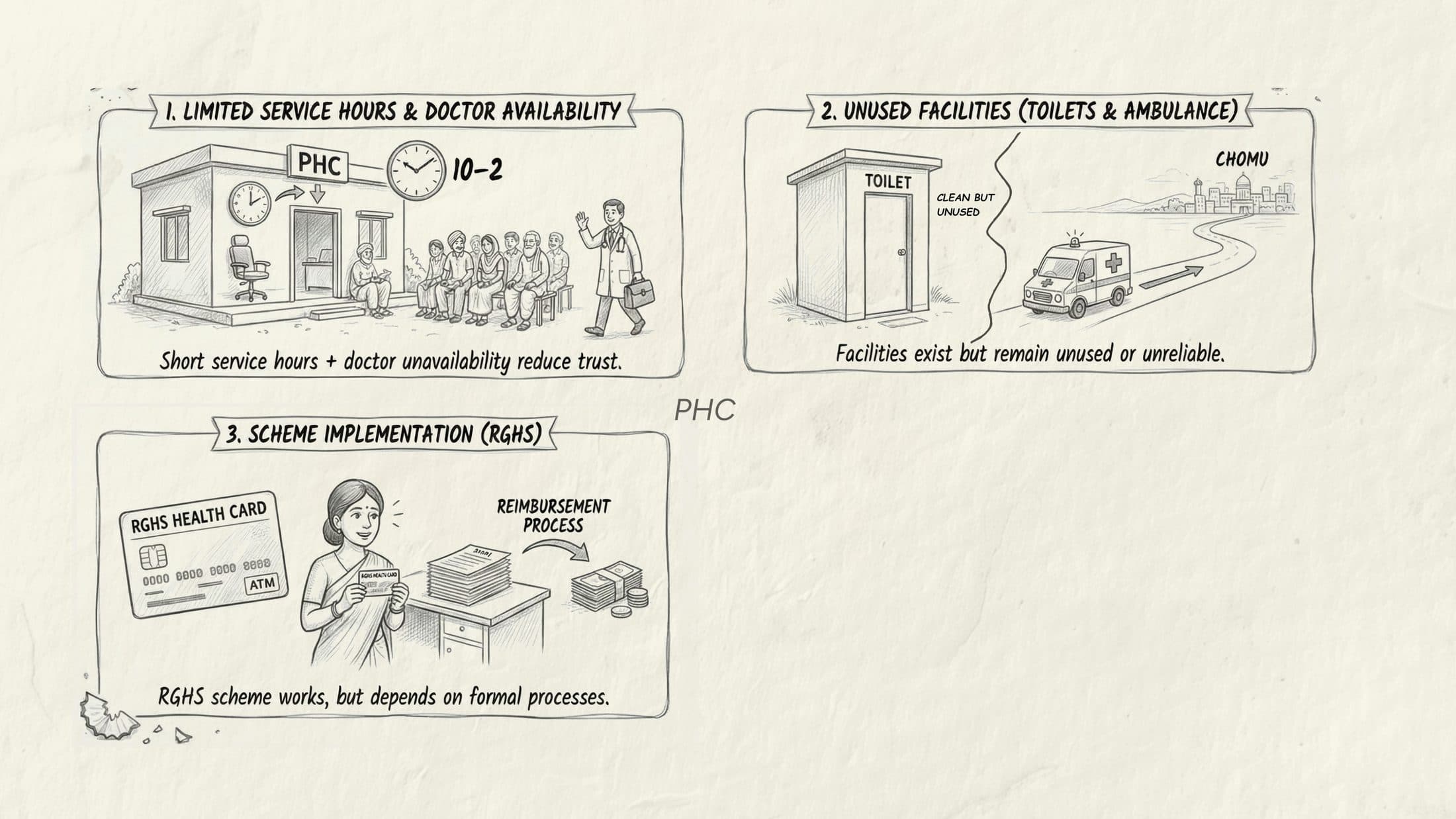
PHC me kai hove sabne kaali goliya dedeve aur capsule deve che va dawai kai kaam koni kare
Kal meri bahu ko dysentery hogayi, usko PHC lekar gaye, unhone bas glucose chadhayi aur kuch nahi kiya, phir usse chomu lekar gaye admit karne
Governance
The Panchayat has 13 wards and real authority, including expenditure approval up to five lakhs, but resident participation is low and signatures are often collected informally. Local politics runs on caste lines, financial status, and family background.
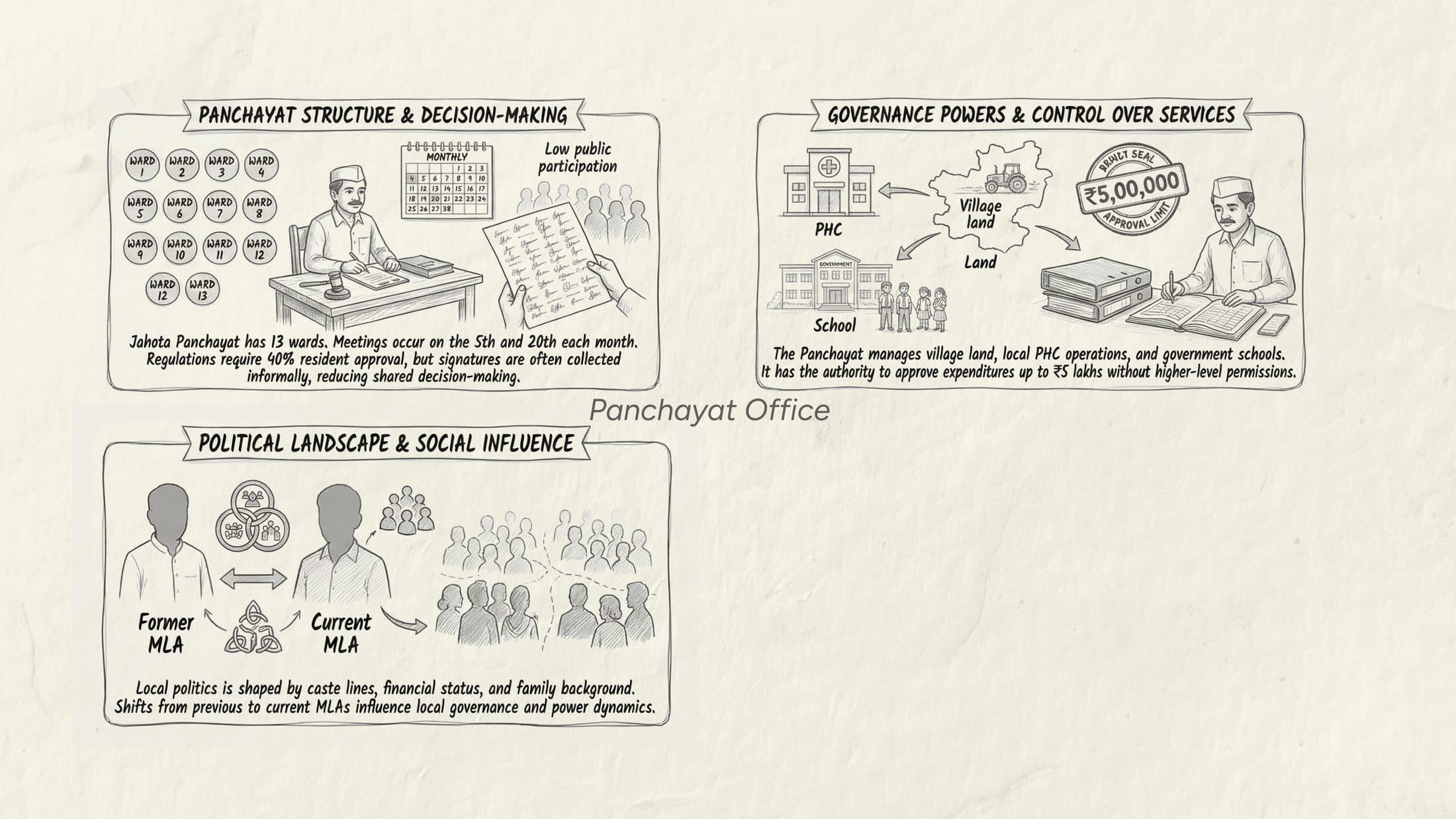
The Sarpanch ate at SC/STs home to break stereotype during election season
Systems Mapping
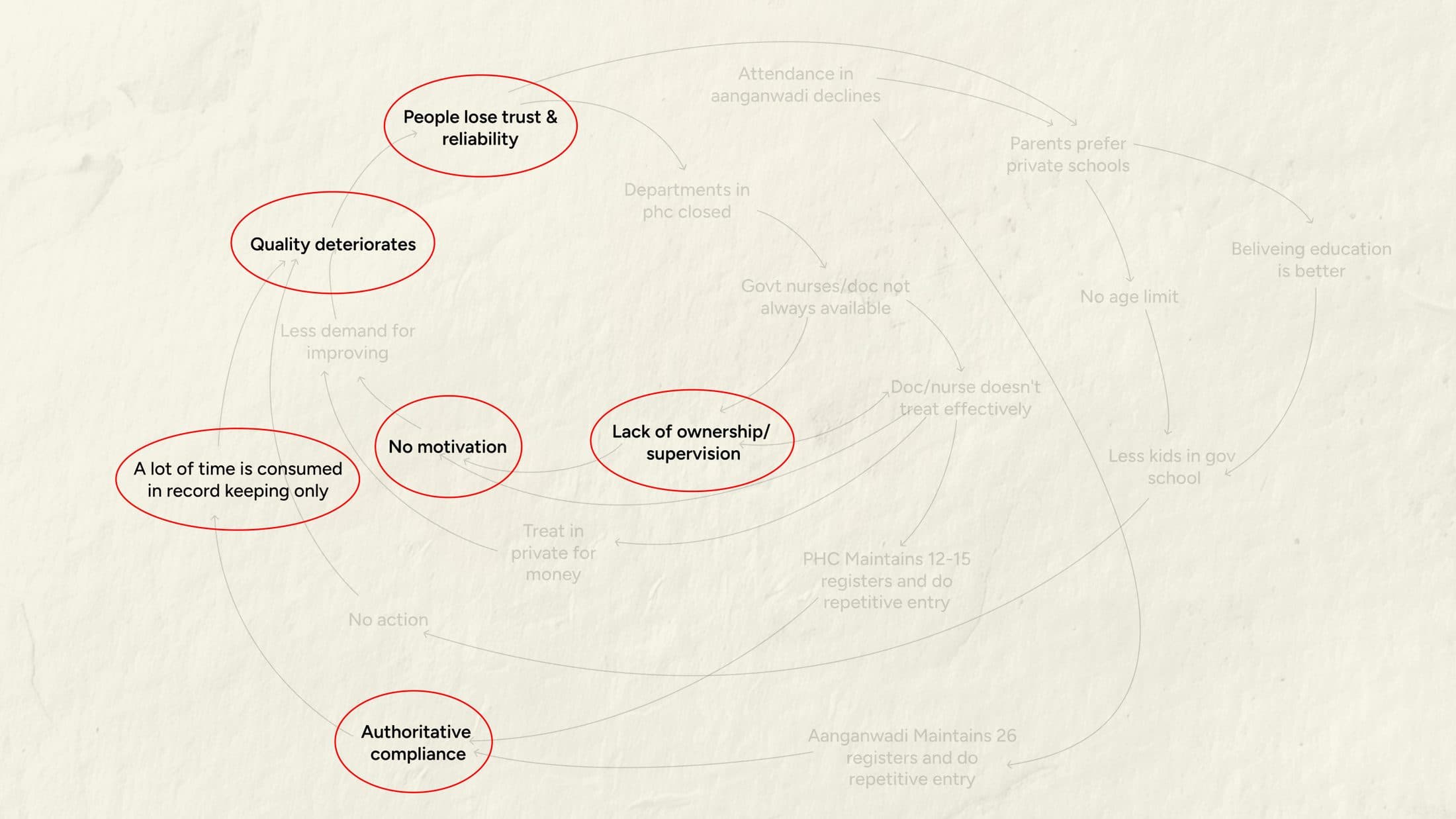
Every interview became a node. Mapping stakeholders and feedback loops across the three sectors revealed the same structural pattern repeating everywhere.
Scroll to explore
Scroll to explore
The Problem
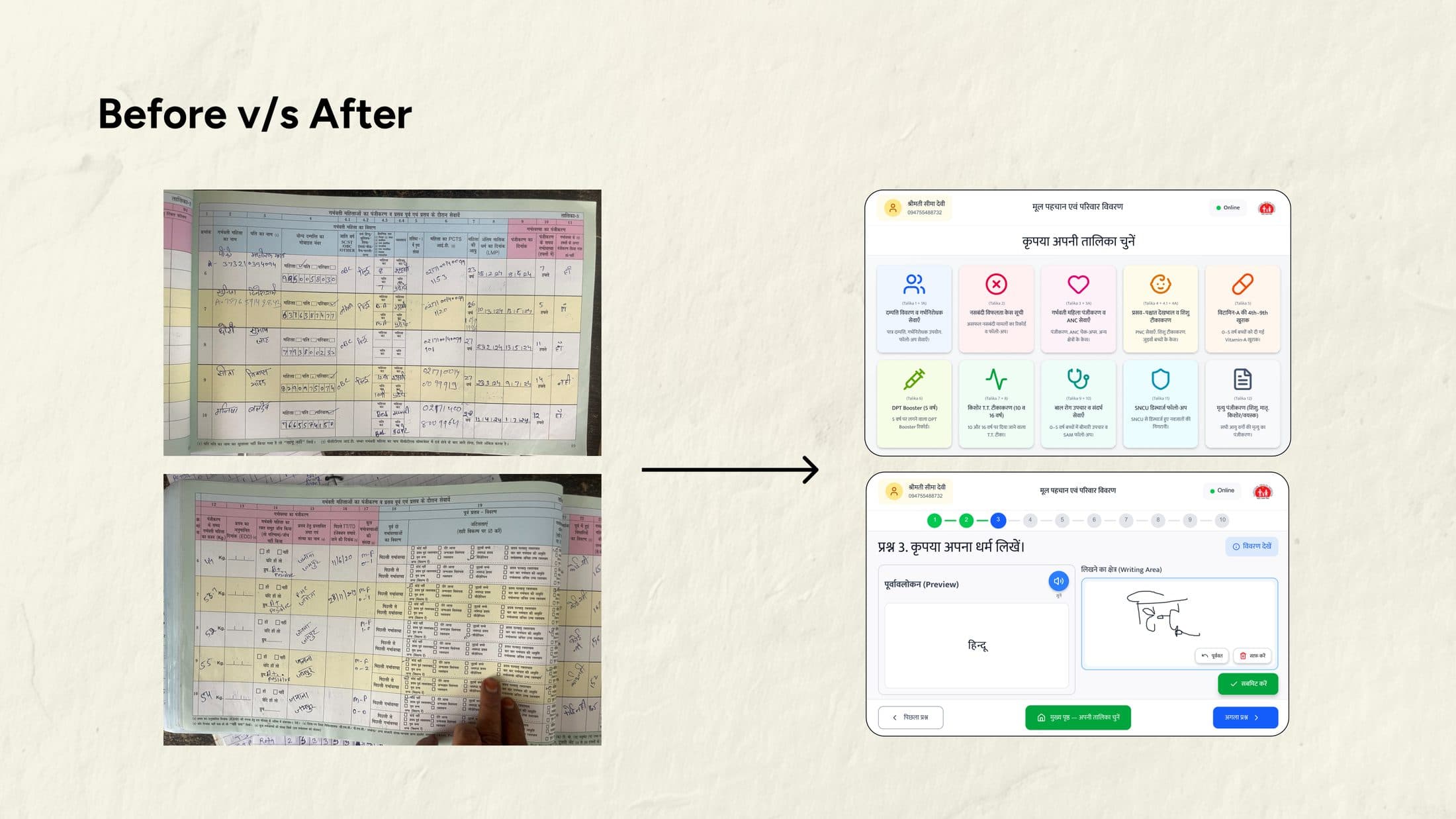
Frontline health workers record the same household data three times. A rough register in the field. A fair register back at the PHC. Then digital re-entry into government systems. Each copy is the same information, written again. Four key touchpoints framed the brief as How might we questions.
Repetitive data entry
How can we reduce the workload of data entry for frontline workers?
Digital literacy
How can we increase digital literacy amongst frontline workers?
Monitoring
How can we ensure saved time goes to service delivery?
Feedback
How can we build a way for frontline workers to share feedback upward?
From there, the cascade is predictable.
The same household data is recorded across multiple registers.
Documentation becomes the primary workload.
Time for actual service delivery shrinks.
Fatigue, errors, and delayed follow-ups grow.
Service quality drops and trust in public systems erodes.
Anganwadis alone maintain 15 separate registers.
One working day. Two workflows.
These four scenes follow a frontline health worker through one day. Drag the handle in each scene to move between the old workflow and the new one.
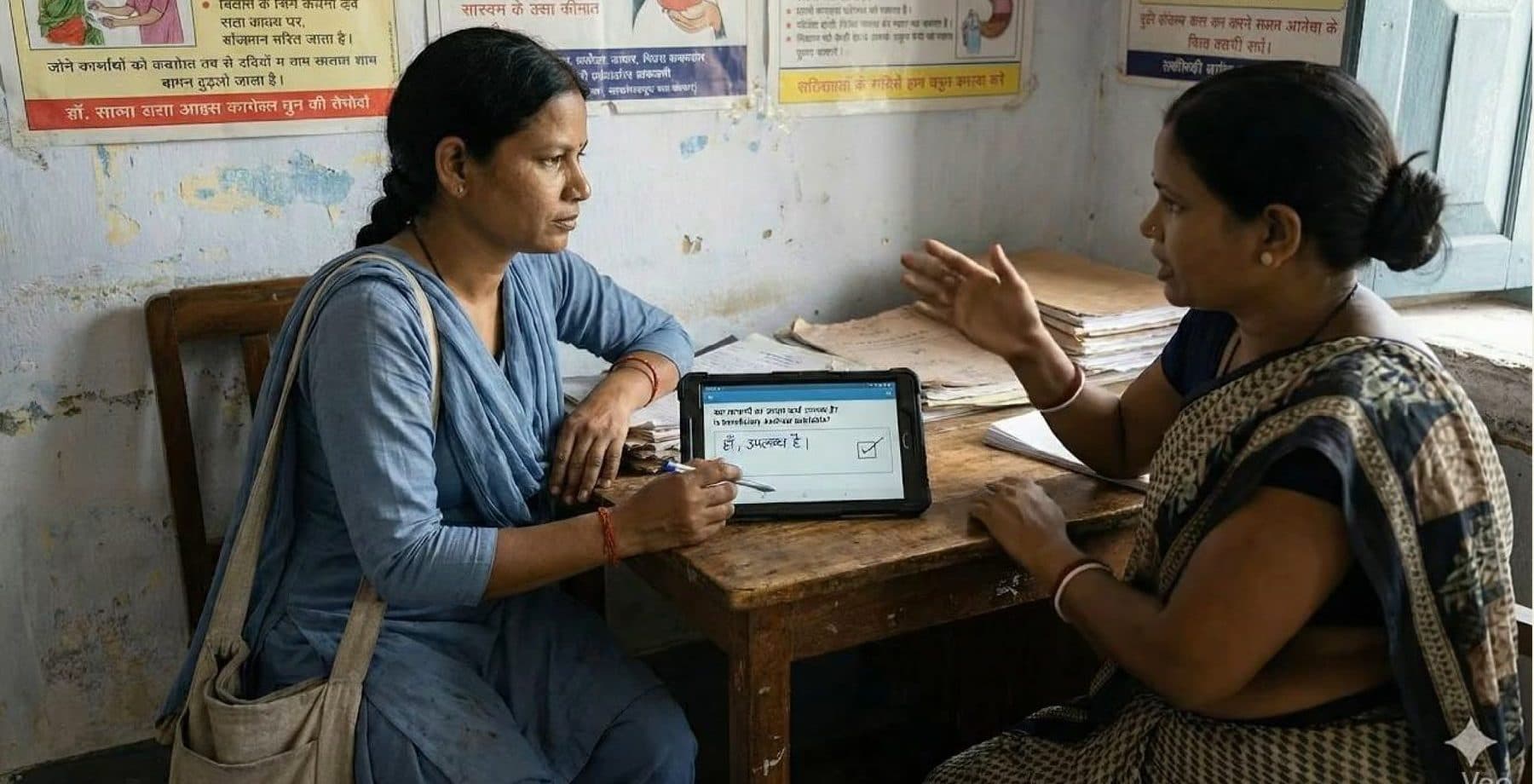
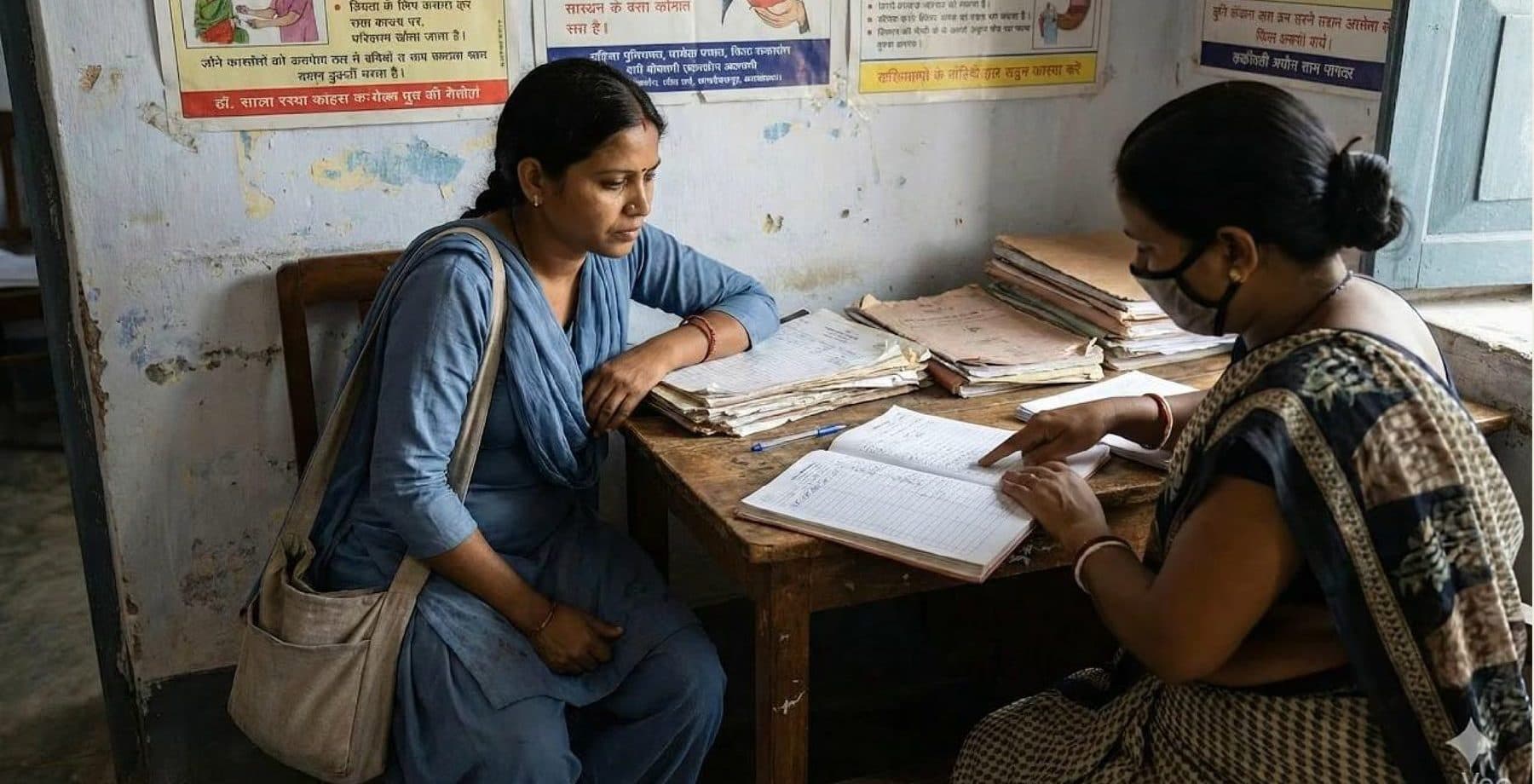
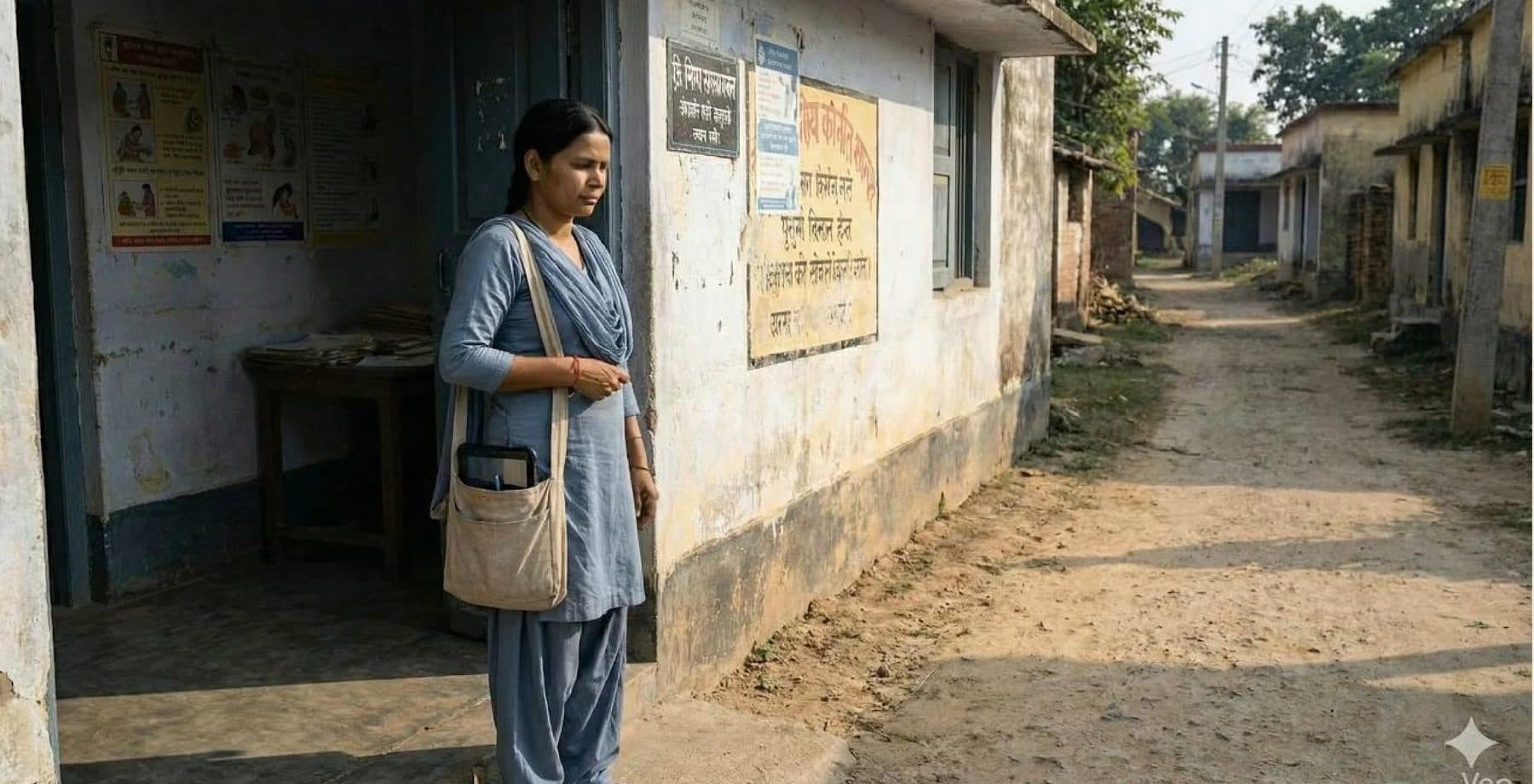
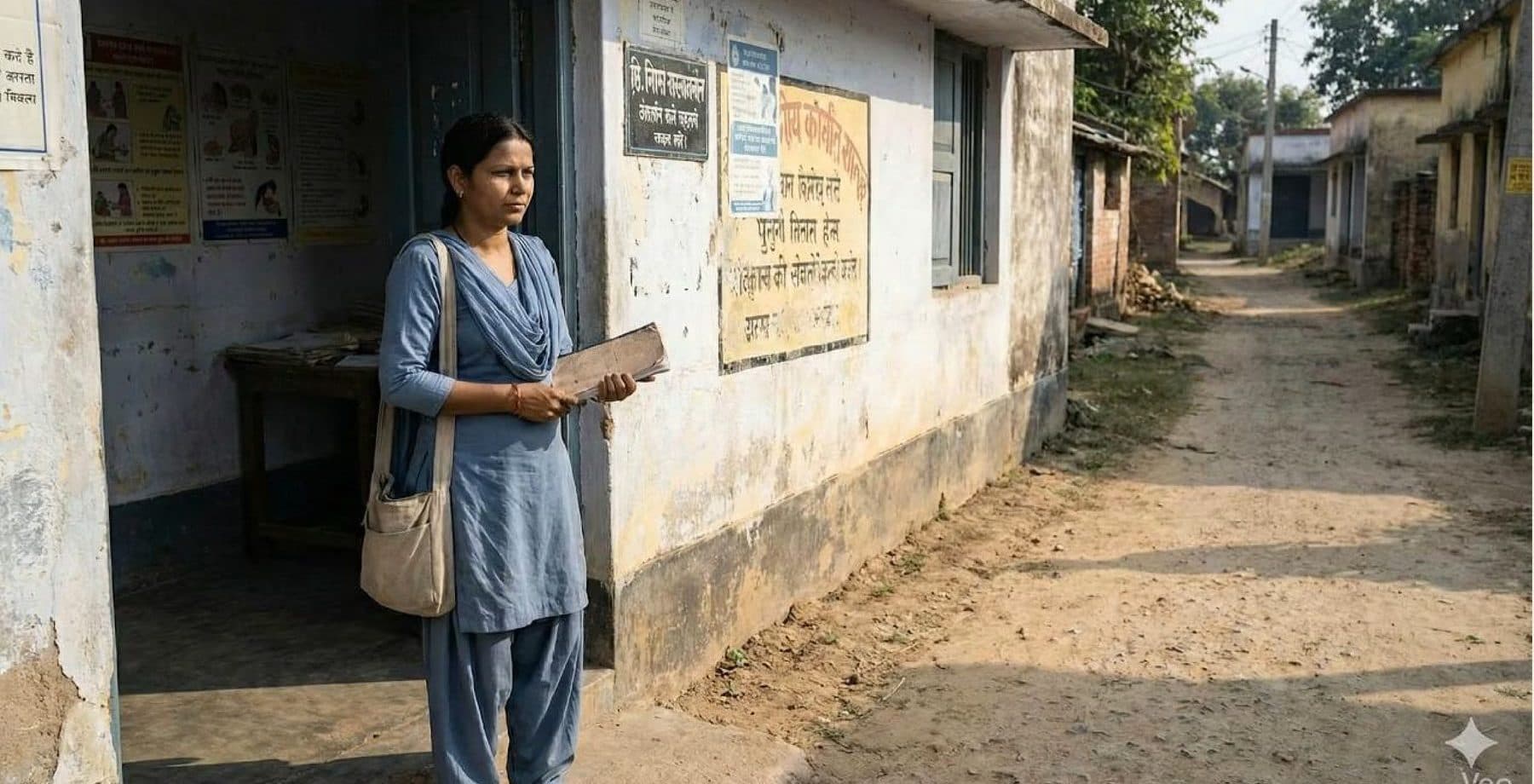
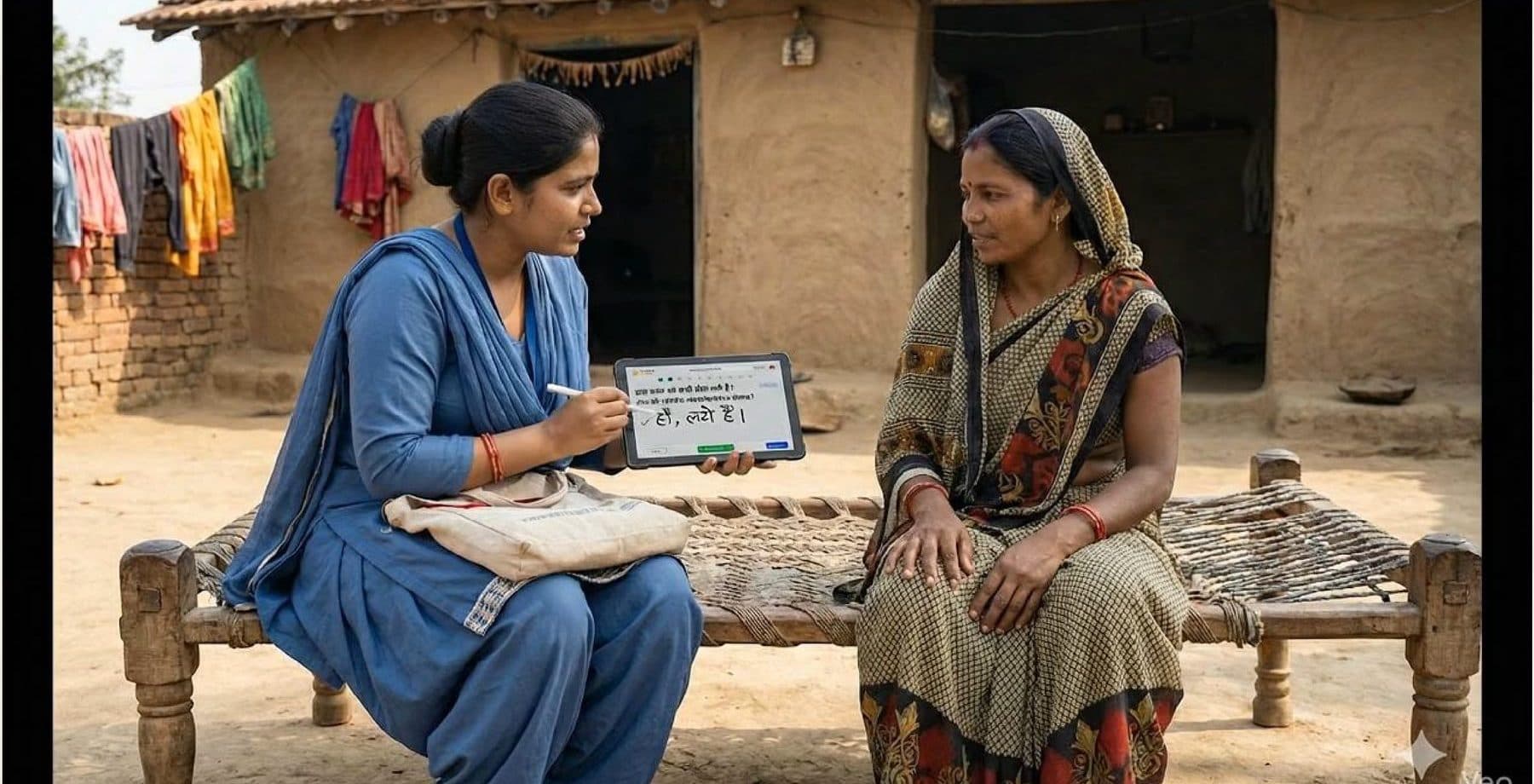
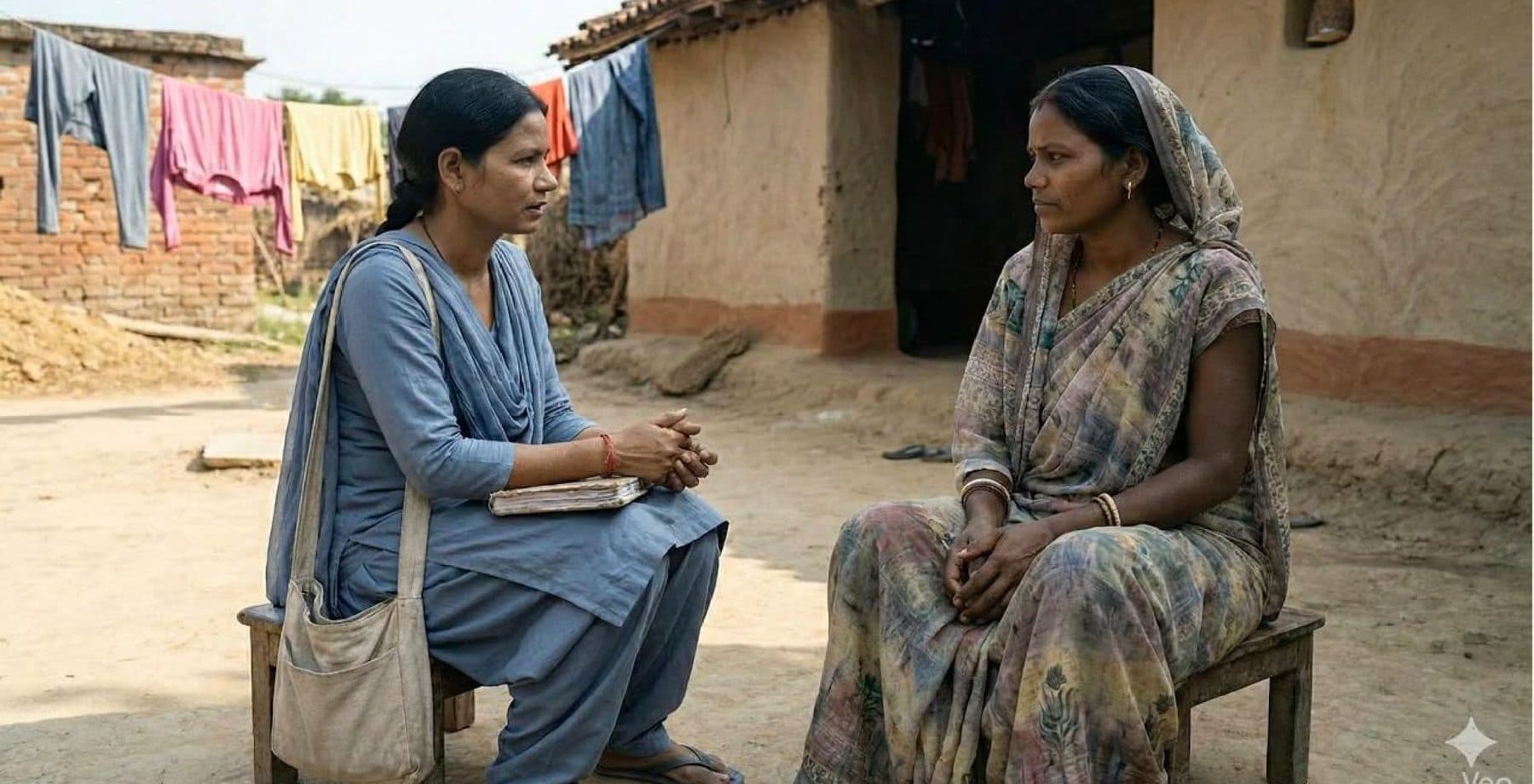
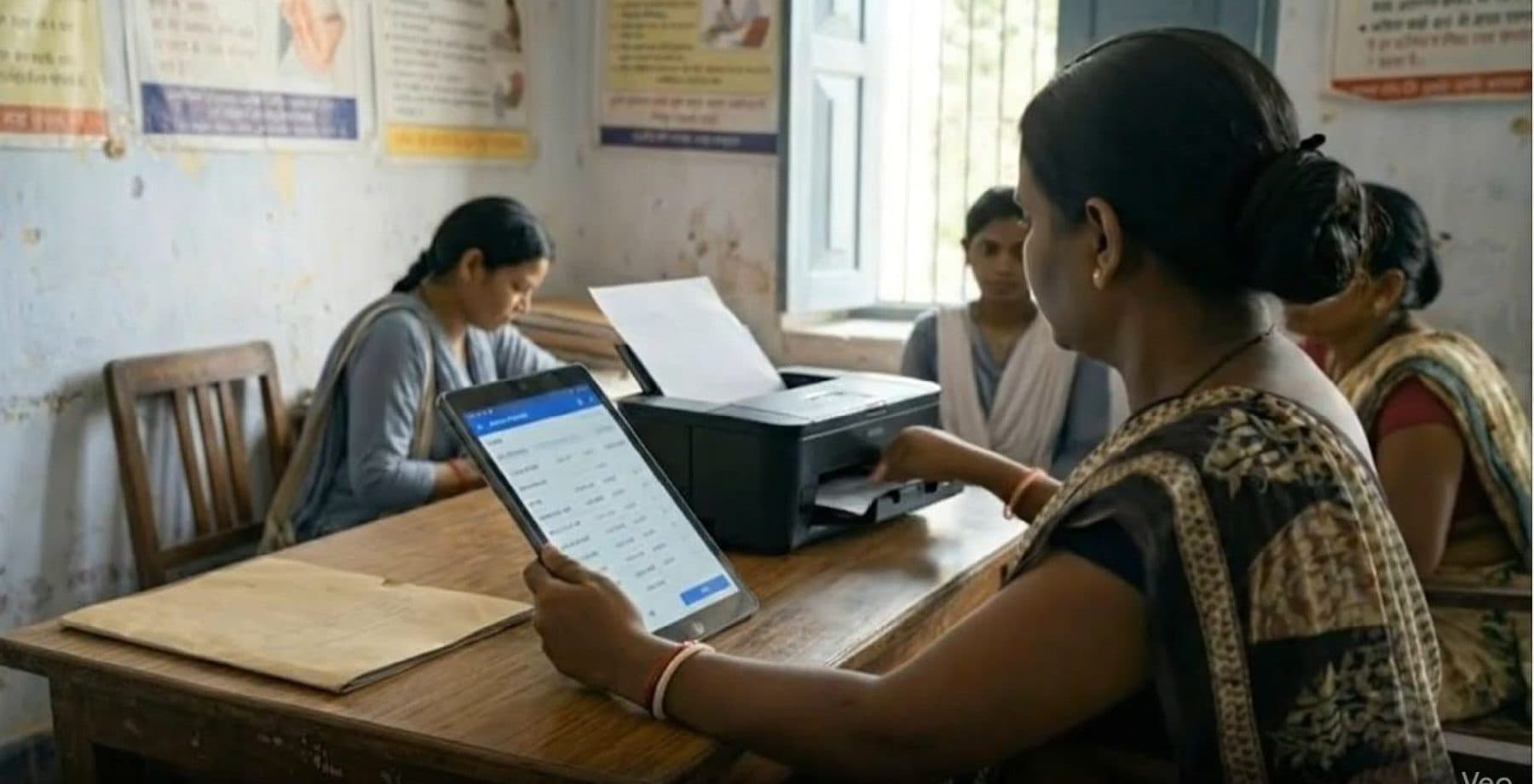
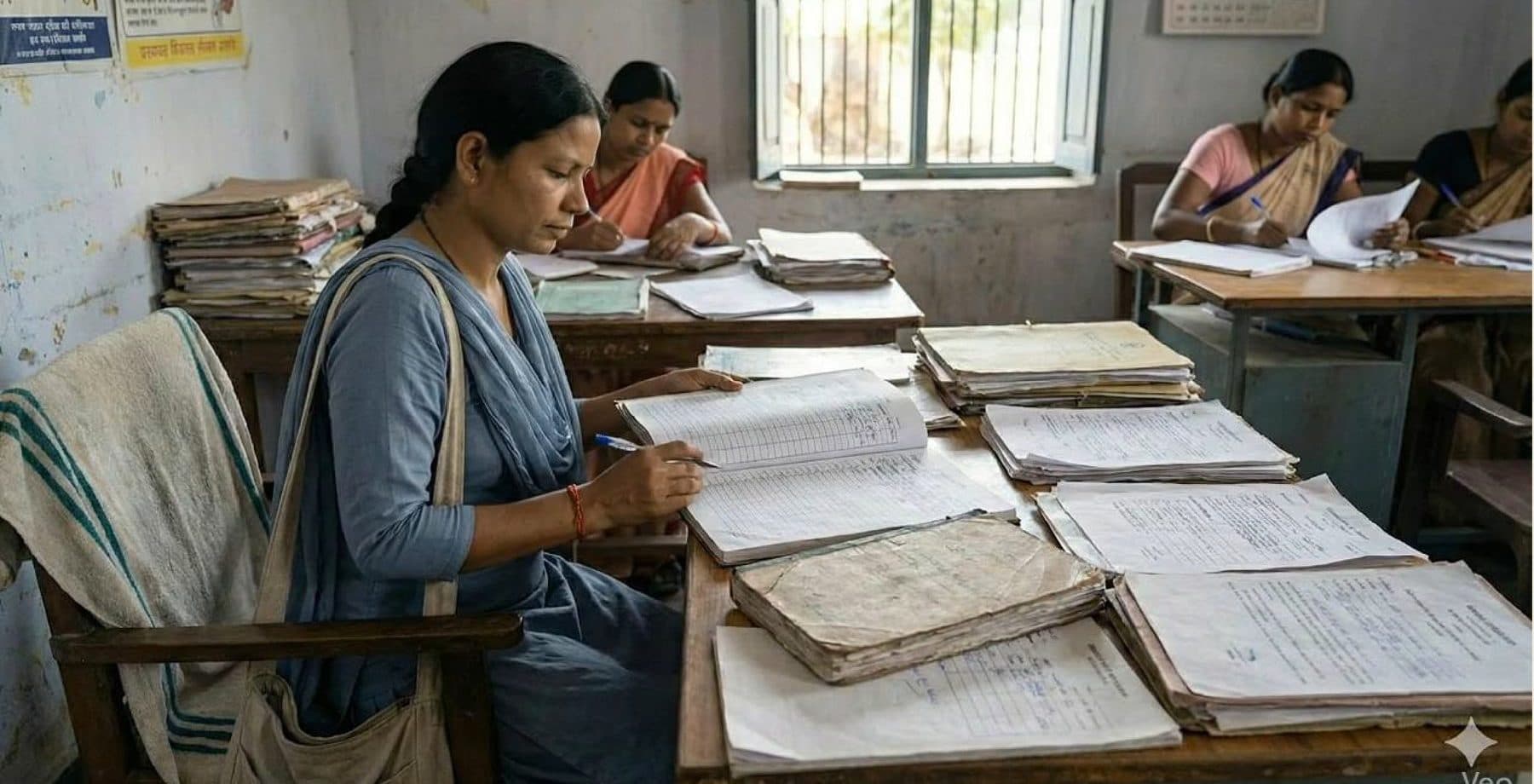
HDCS. Write once, in Hindi, by hand.
HDCS is the Healthcare Data Collection System. A tablet-sized device with a stylus. A worker writes in Hindi, the way she already writes in her registers. The device converts her handwriting to digital text. Three repetitive recording steps become one.
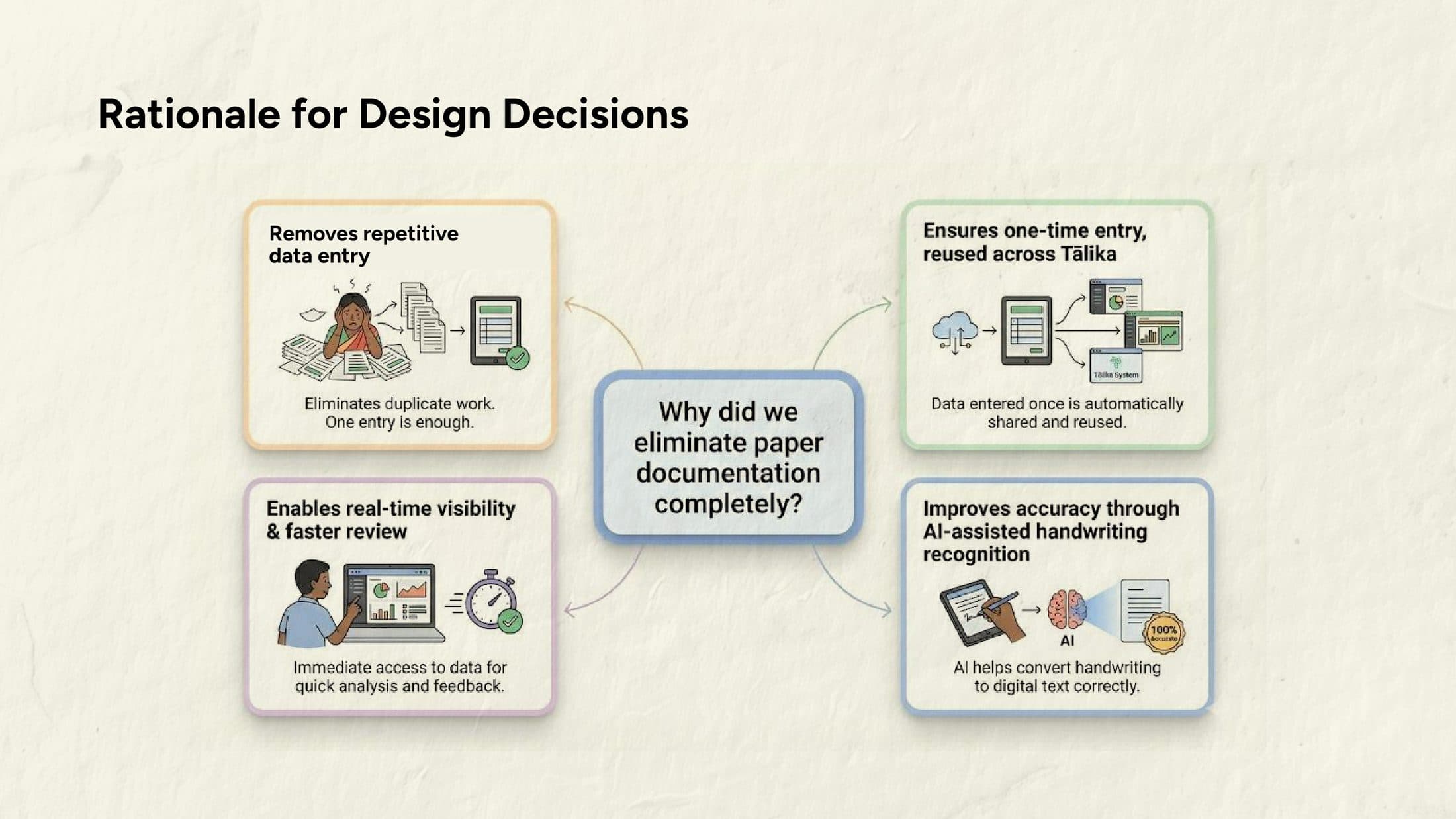
Reduces data entry from three repetitive steps to one
Saves and syncs automatically to one centralised system
Gives the ANM a unified view of all field data
Gives supervisors real-time access across all field workers
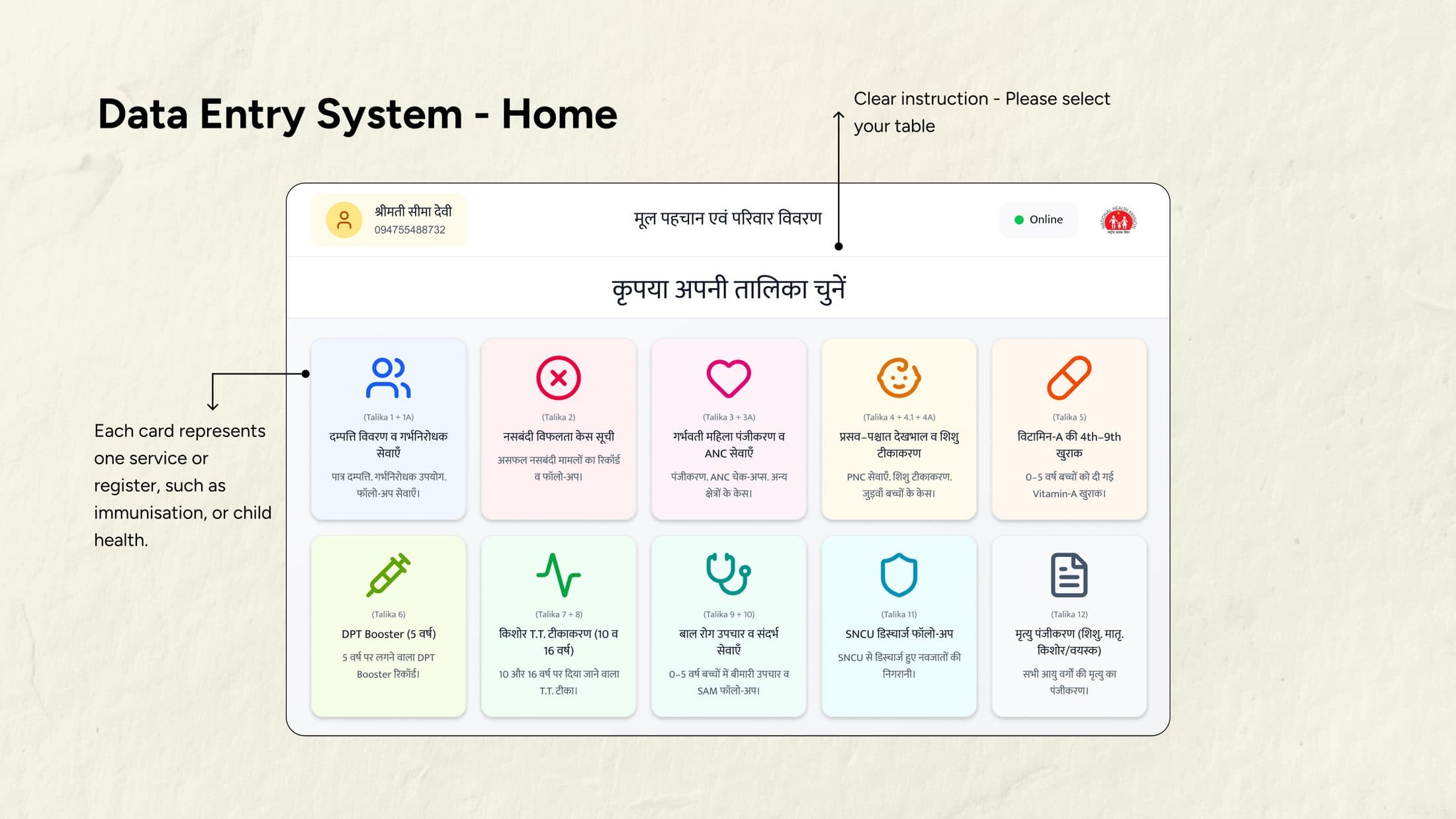
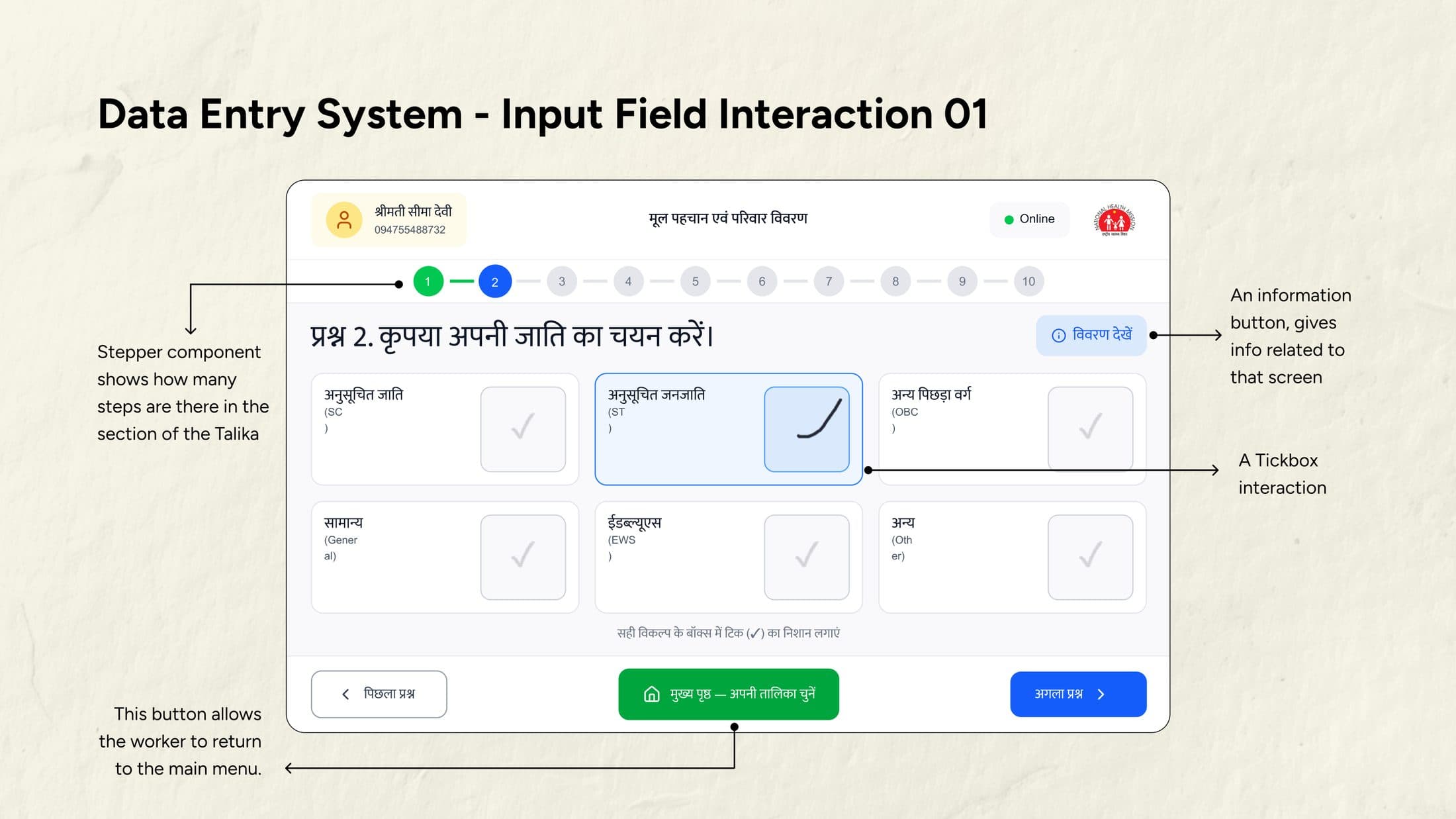
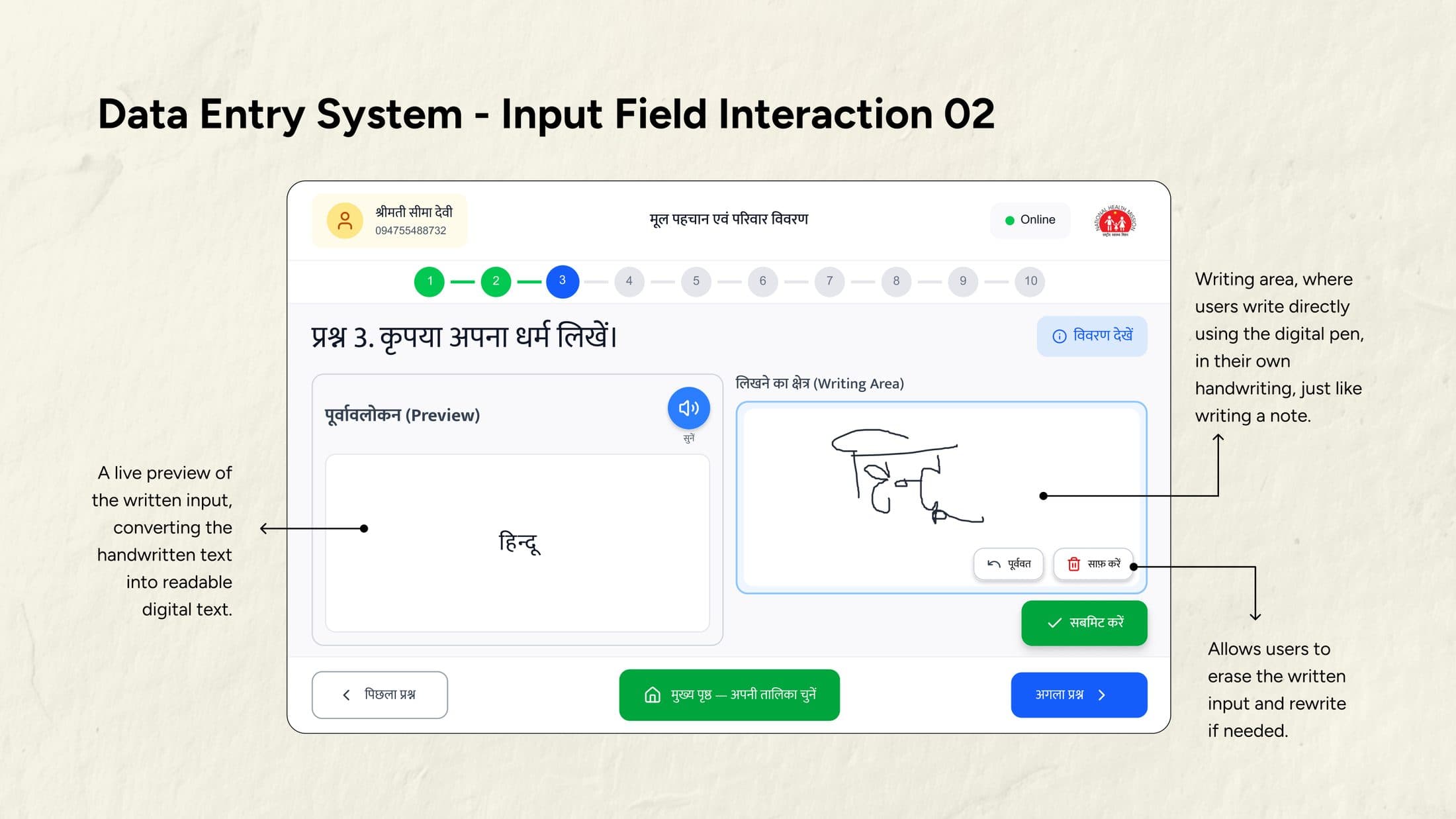
Collection is only half the system.
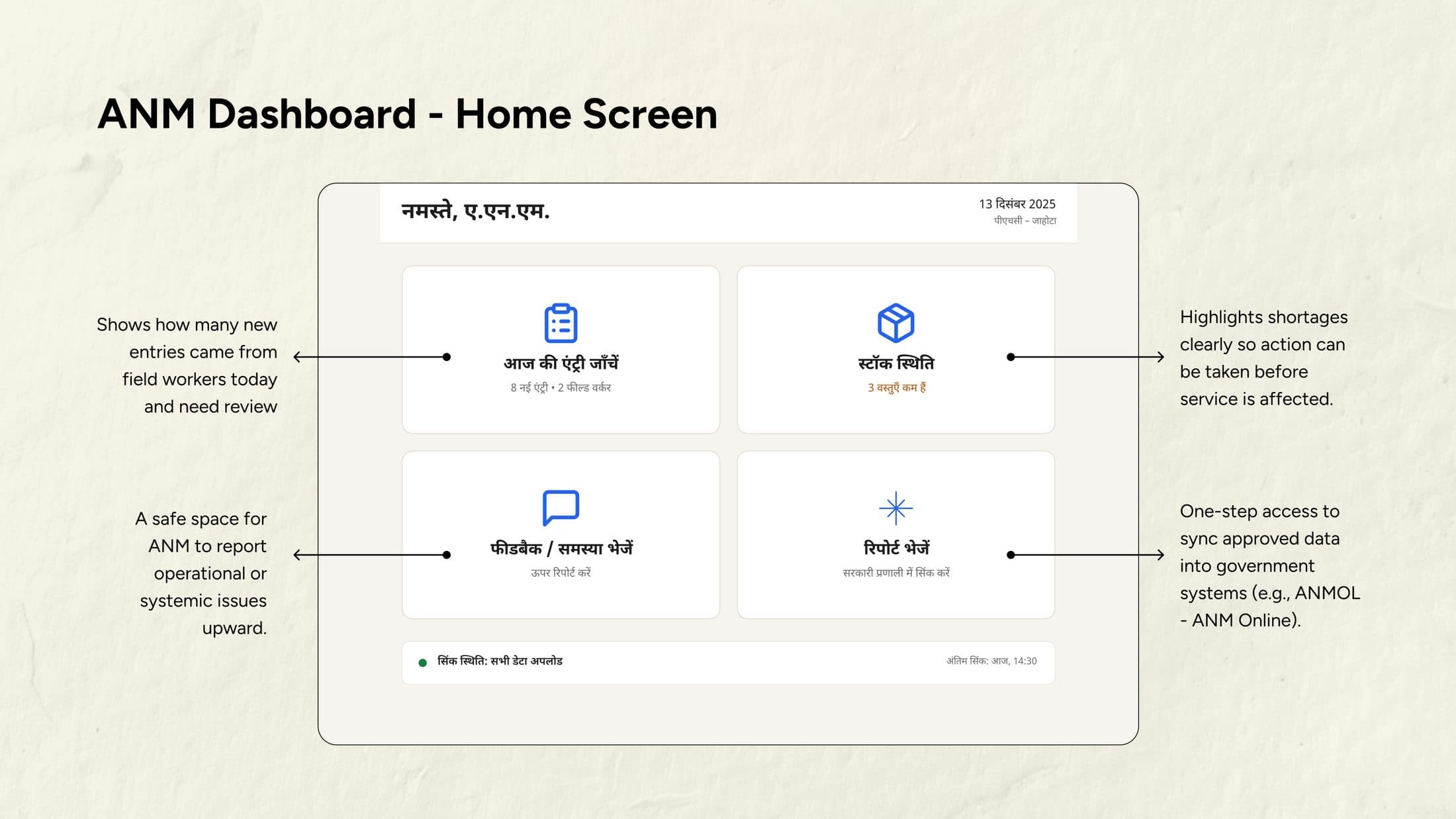
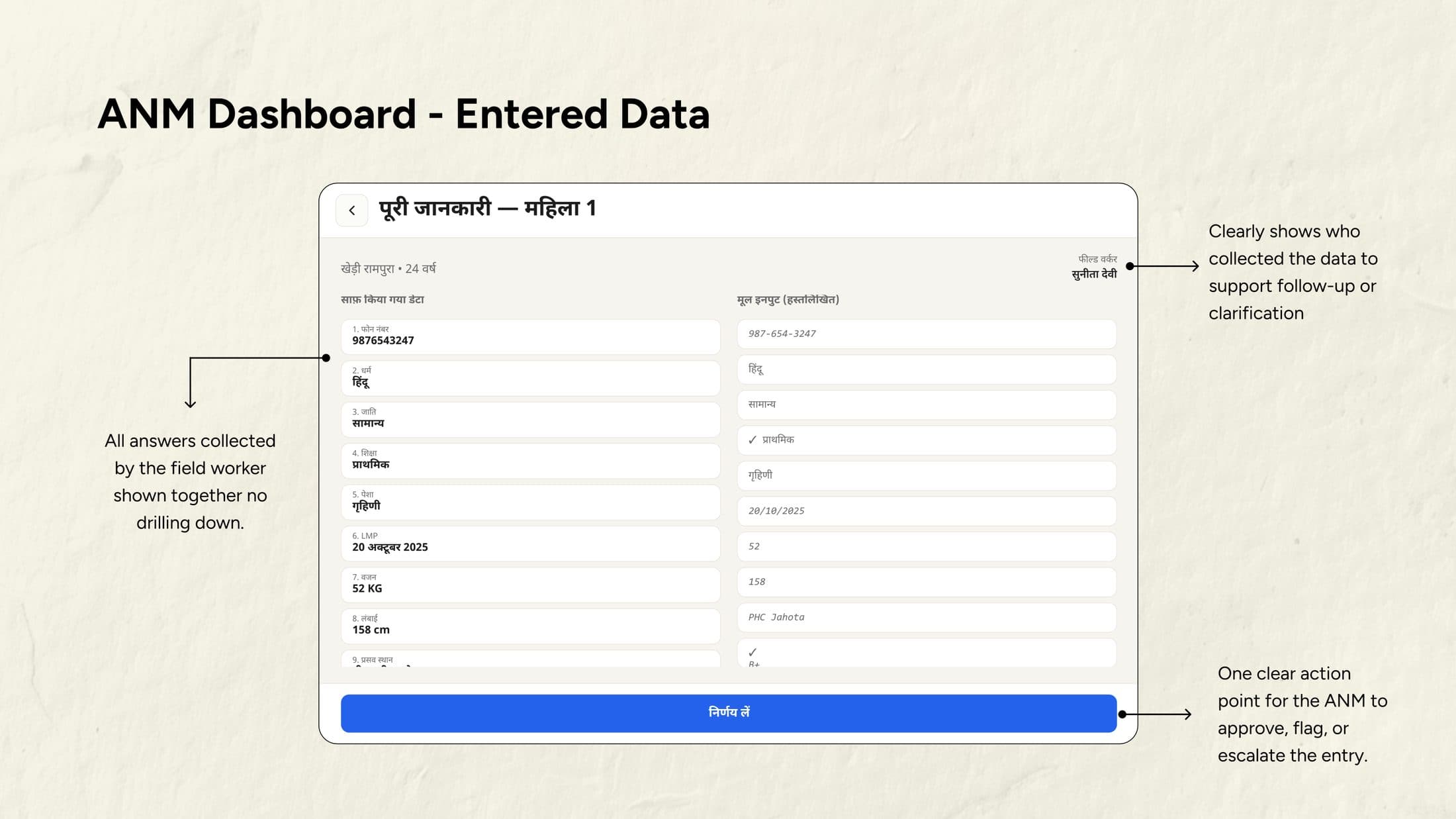
Field data syncs to a unified ANM dashboard. The ANM reviews entries, sees stock at a glance, reports feedback upward, and pushes records into government systems such as ANMOL in one step. The dashboard closes the loop.
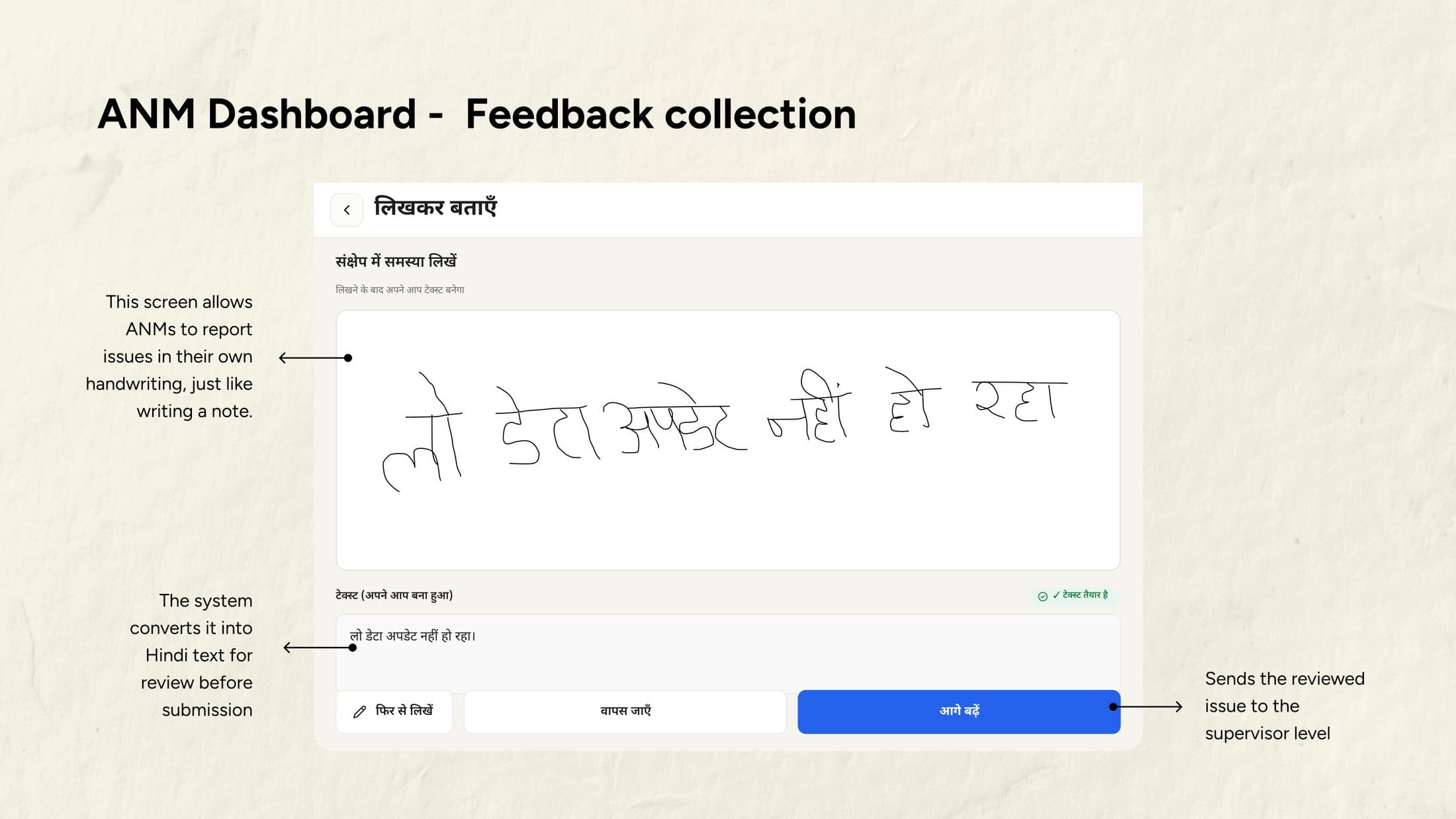
Tested with the workers it was built for.
We ran usability tests with users of mid-level digital literacy. The clearest finding came early. Users entered a response and immediately tapped Next, without checking the preview. We added guiding text and made the captured response more visible before the next step.
Adoption starts on paper. A 7-day training program begins with physical practice sheets that replicate the digital flow. Workers build the habit on a familiar surface first, then carry it onto the device.
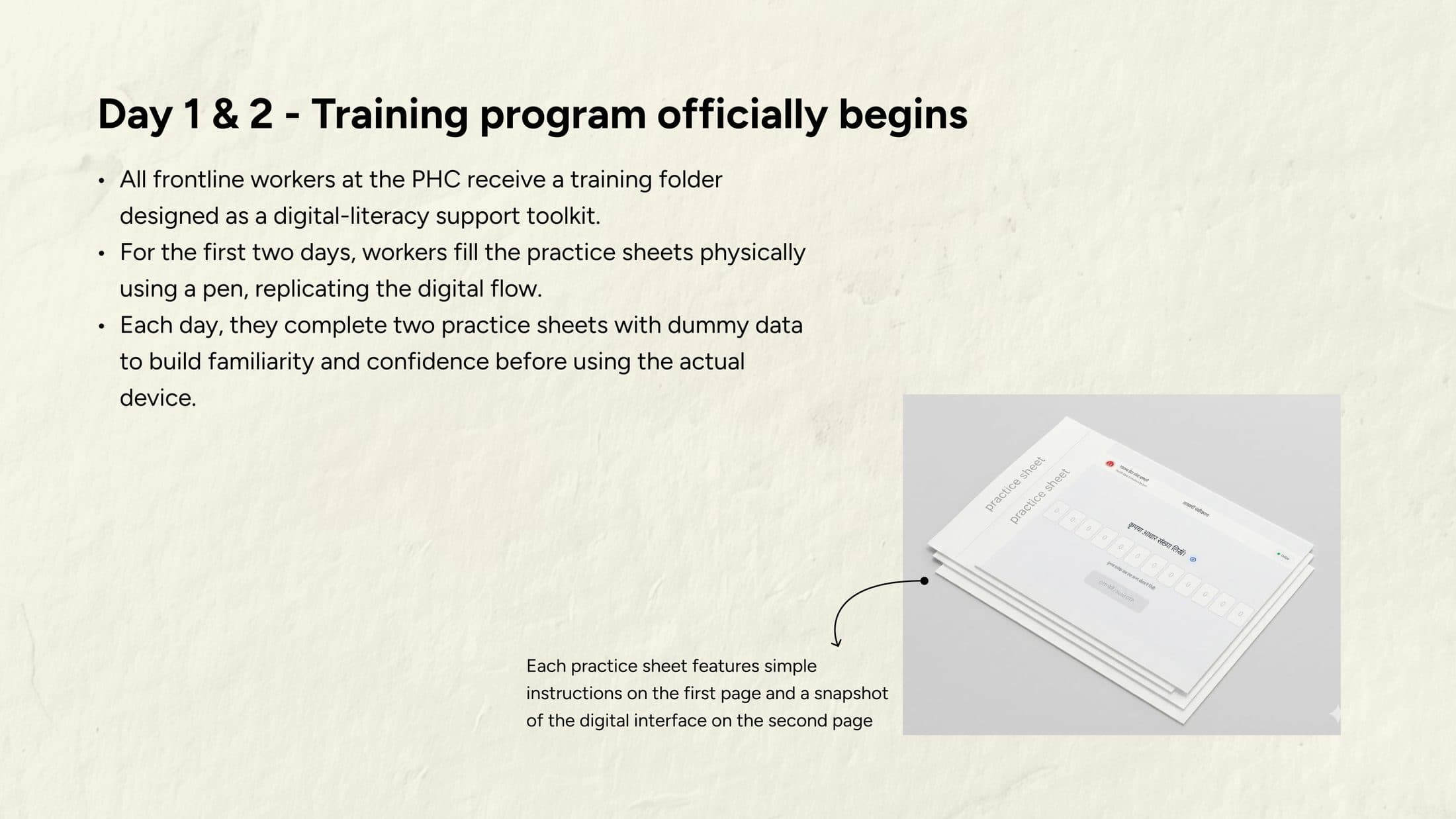
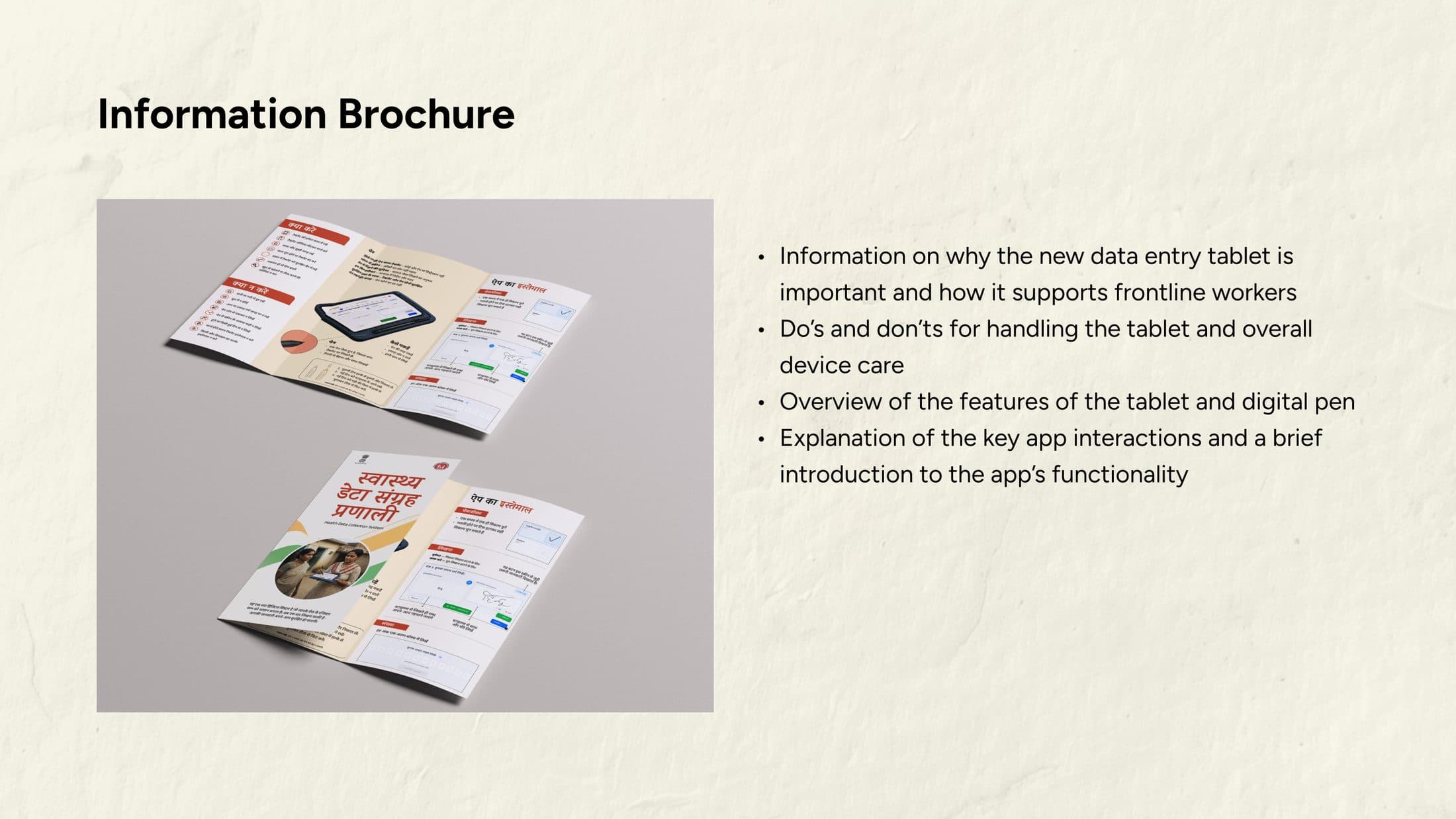
One register instead of fifteen.
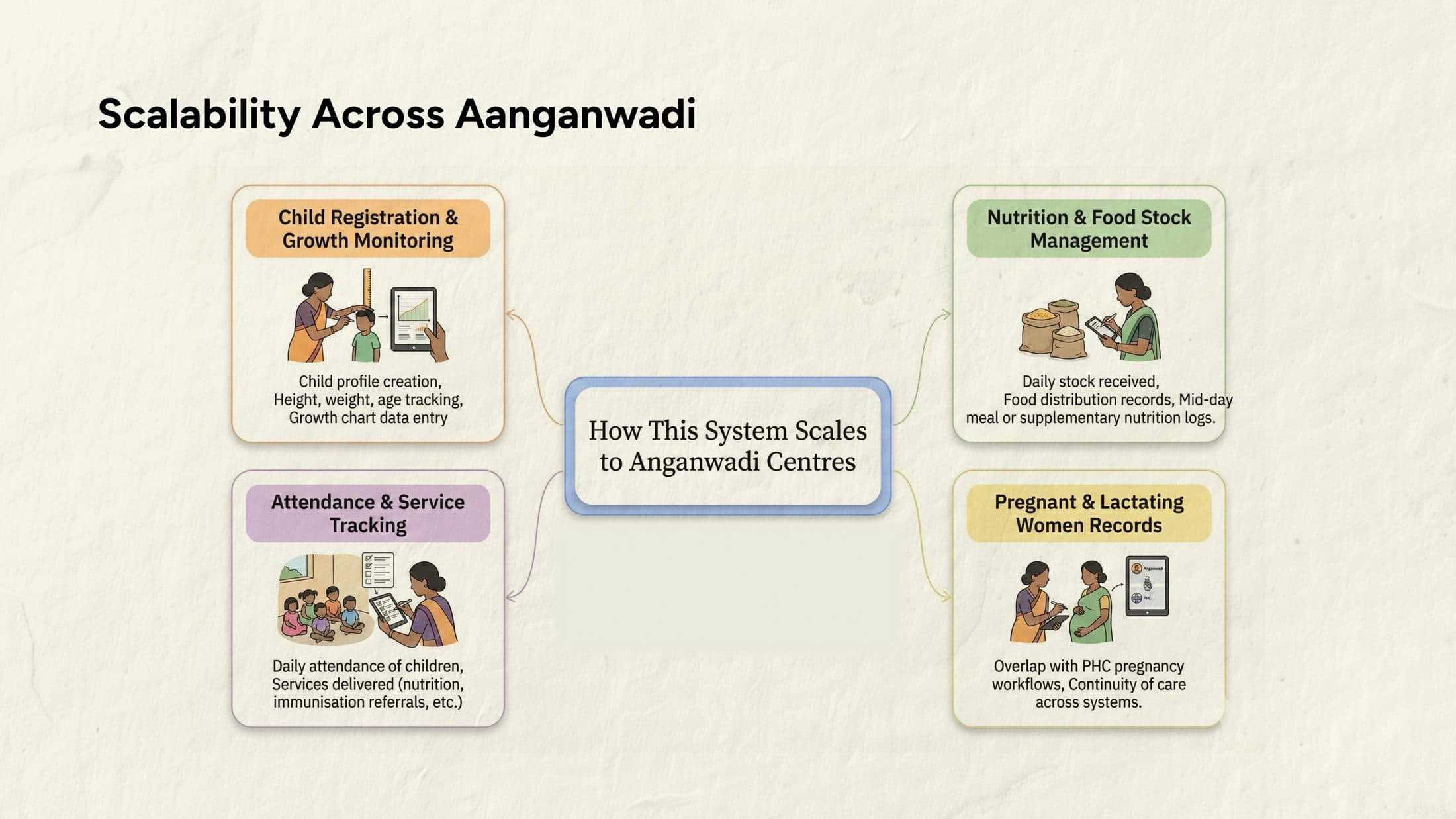
Systems design taught us patience. For weeks the work was maps, loops, and conversations, with no screens in sight. The solution that finally emerged is not an app with features. It is one register instead of fifteen.
For me, the personal lesson was about digital literacy. Designing for someone who has never relied on a screen does not mean simplifying an interface. It means borrowing the physical habits she already trusts, the pen, the register, the daily rhythm, and letting the technology disappear behind them.